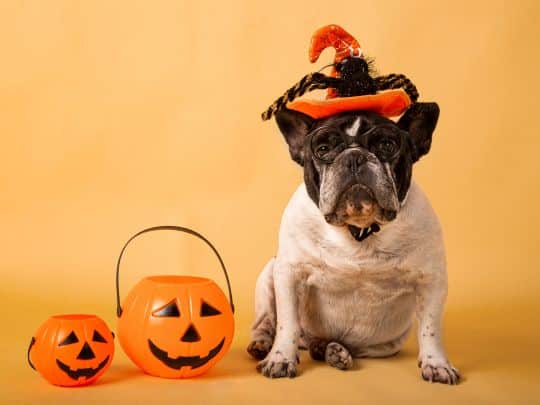
Halloween can be a fun night for families, but dogs experience the holiday very differently. Doorbells ring repeatedly. Costumed strangers appear at the door. Candy bowls sit within reach. Decorations flash, move, and make unfamiliar sounds. Even a normally relaxed dog can become nervous or curious enough to get into trouble.
Most pet parents already know that chocolate is dangerous for dogs. However, Halloween brings several less obvious risks that are easy to miss while everyone is busy celebrating. Knowing what to watch for can help you keep your dog safe without leaving them out of the festivities.
Here are 10 Halloween hazards that deserve a closer look.
1. Sugar-Free Candy Can Be More Dangerous Than You Think
Chocolate gets plenty of attention around Halloween, but sugar-free candy can pose an equally serious concern. Some sugar-free products contain xylitol, a sweetener that is highly toxic to dogs.
Xylitol exposure can cause a rapid drop in blood sugar. Larger exposures may also cause severe liver damage. Weakness, vomiting, poor coordination, collapse, or seizures can occur after ingestion.
Do not assume candy is safe simply because it does not contain chocolate. Keep sugar-free gum, mints, baked goods, and candy completely out of your dog’s reach. If you suspect your dog consumed xylitol, contact a veterinarian immediately rather than waiting for symptoms.
2. Candy Wrappers Can Cause an Intestinal Blockage
The candy itself is not the only concern. Dogs may swallow foil, plastic, paper wrappers, or even pieces of candy bags while trying to reach something that smells appealing.
These materials cannot always move normally through the digestive tract. A swallowed wrapper could contribute to choking or an intestinal obstruction.
Watch for vomiting, reduced appetite, abdominal discomfort, unusual tiredness, or difficulty passing stool after a suspected ingestion. If your dog swallowed packaging or another foreign object, contact a veterinarian in Vint Hill for guidance.
Never intentionally induce vomiting unless a veterinary professional specifically tells you to do so.
3. Glow Sticks and Glow Jewelry Can Become Chew Toys
Glow bracelets and necklaces are common Halloween accessories. To a curious dog, however, they may look like colorful chew toys.
The liquid inside many glow products is extremely bitter. Biting into one may cause sudden drooling, pawing at the mouth, agitation, or foaming. The plastic itself may also become a choking or swallowing hazard if your dog tears the item apart.
Store unused glow products away from pets and collect discarded ones after Halloween activities end.
If your dog chews one, contact your veterinary team for advice based on the product and your dog’s symptoms.
4. Costumes Can Restrict Movement or Breathing
A dog costume may look adorable in a photo while still being uncomfortable for the dog wearing it. Tight neck openings, elastic bands, dangling pieces, masks, hats, and poorly fitted clothing can restrict movement or interfere with normal breathing. Small decorative pieces can also be chewed off and swallowed.
Watch your dog’s behavior after putting on a costume. Panting, freezing in place, repeatedly scratching at the outfit, hiding, or trying to bite the fabric can indicate discomfort.
A costume should never interfere with your dog’s ability to walk, see, hear, breathe, or use the bathroom normally.
5. Decorations Can Create Unexpected Household Hazards
Halloween decorations can transform familiar rooms into unfamiliar spaces. Unfortunately, some decorations introduce risks at exactly the height where dogs explore.
Electrical cords may be chewed. Fake spiderwebs can become tangled around paws or legs. Small plastic decorations may be swallowed. Motion-activated decorations can frighten sensitive dogs.
Before decorating, look at the room from your dog’s level. Secure cords, remove small objects, and place breakable items somewhere your pet cannot reach them.
Be especially careful with decorations placed along hallways or near your dog’s food, water, bed, and usual walking paths.
6. Candles and Jack-o’-Lanterns Can Cause Burns
A lit pumpkin may seem harmless when placed on the floor or front steps. One curious nose or wagging tail can quickly change that.
Dogs can knock candles over, burn their noses, or brush their fur against an open flame. A tipped candle can also start a household fire.
Battery-operated candles are generally a safer choice around pets. Even then, keep them out of chewing range because batteries and plastic components can create separate hazards if swallowed.
If your dog suffers a burn, do not apply household creams or ointments without veterinary direction. Call a vet near you and ask what immediate care is appropriate.
7. Repeated Doorbell Rings Can Trigger Stress or Escape Attempts
Halloween can turn your front door into the busiest part of the house. Every doorbell ring may cause barking, pacing, jumping, or attempts to rush outside.
Even dogs that usually stay near their owners can behave differently when they are frightened or overstimulated.
Set up a quiet room before trick-or-treating begins. Include your dog’s bed, water, familiar toys, and other comforting items. Background music or steady household noise may also help reduce the impact of sounds coming from the front door.
Make sure your dog’s identification information is current before Halloween night. Accidental escapes can happen quickly when doors repeatedly open and close.
8. Costumed Visitors May Frighten a Normally Social Dog
Dogs identify people partly through familiar body shapes, faces, movements, voices, and scents. Halloween costumes can change several of those cues at once. Masks, large hats, capes, inflatable costumes, and unusual movements may make a familiar person seem threatening. Children may also approach dogs excitedly or unexpectedly.
Never force your dog to greet someone in costume. Give your pet enough distance to observe without feeling trapped. If your dog backs away, hides, growls, stiffens, repeatedly licks their lips, or tries to leave, respect that communication. Move your dog to a calmer area instead of encouraging another interaction.
9. Halloween Parties Can Lead to Accidental Food Exposure
A crowded table can offer dogs access to much more than chocolate. Grapes and raisins can be toxic to dogs. Foods containing onions or garlic may also cause problems. Alcohol, caffeinated drinks, rich foods, fatty leftovers, and some baked goods can create additional health concerns.
Guests may not know which foods are unsafe for pets. Ask everyone not to feed your dog from their plate.
If your dog eats something questionable, identify the food and approximate amount whenever possible. Save the packaging or ingredient list. This information can help a veterinarian in Vint Hill determine the appropriate next step.
10. Post-Halloween Cleanup Is Part of Pet Safety
The danger does not disappear when trick-or-treating ends. Dropped candy may remain under furniture. Torn wrappers can hide behind couches. Decorations may fall overnight. Children may leave candy bags on bedroom floors where dogs can easily reach them.
Before going to bed, do a quick sweep of the areas your dog can access. Pick up food, wrappers, costume pieces, glow products, batteries, strings, and damaged decorations.
Continue watching your dog the following day if you suspect they may have eaten something unusual. Vomiting, repeated diarrhea, difficulty breathing, collapse, seizures, severe abdominal bloating, or exposure to a toxic substance can require prompt veterinary attention. The hospital’s published emergency guidance identifies several of these symptoms as reasons to seek immediate care.
How Can You Make Halloween Easier for Your Dog?
Preparation can prevent many Halloween problems. Exercise your dog earlier in the day, before neighborhood activity increases. Feed their normal meal and keep their routine as consistent as possible.
Create a secure retreat away from the front door and give your dog the choice to stay there. Do not require them to participate in costumes, parties, photos, or greetings if they seem uncomfortable.
Most importantly, know where to seek veterinary help before you need it. Having the phone number for a vet near you readily available can save valuable time when you are dealing with a possible toxin exposure, injury, or sudden illness.
Keep Halloween Fun Without Putting Your Dog at Risk
Halloween should end with happy memories, not an unexpected veterinary emergency. A few precautions around candy, costumes, decorations, visitors, and open doors can make the evening much safer for your dog.
When something does go wrong, having an established veterinary team can make it easier to decide what your pet needs next. Willow Animal Hospital provides preventive care, diagnostics, dentistry, surgery, physical therapy, urgent pet care, and additional veterinary services for dogs and cats in Vint Hill.
The hospital’s veterinary team includes Dr. Andrea Ballou, Dr. Laurel Marley, Dr. Shannon Heath Kasmierski, and Dr. Angela Parquette, supported by veterinary assistants, technicians, and office staff. Whether your dog needs routine care or evaluation for an unexpected health concern, the team can help you understand the next steps.
For appointments or questions about your pet’s health, call (703) 754-8000.
Frequently Asked Questions
1. What should I do if my dog eats Halloween candy?
Ans: Remove any remaining candy and determine what your dog ate, including the ingredients and approximate amount. Keep the packaging if possible. Contact a veterinarian promptly, especially if the candy contains chocolate, xylitol, raisins, or another potentially harmful ingredient. Do not induce vomiting unless specifically instructed by a veterinary professional.
2. Can Willow Animal Hospital help if my dog gets sick during Halloween?
Ans: Yes. Willow Animal Hospital provides veterinary care in Vint Hill and offers diagnostic and urgent pet care services for sudden health concerns. The hospital states that established patients can be triaged during office hours and directed to appropriate care based on their needs.
3. How can I tell whether my dog is stressed by Halloween?
Ans: Watch for hiding, pacing, trembling, excessive panting, whining, barking, trying to escape, refusing treats, or staying unusually close to you. Some dogs may become defensive when frightened. Give your dog space and move them away from the activity rather than forcing interaction.
4. Where can Vint Hill pet parents take a dog with a sudden Halloween health problem?
Ans: Willow Animal Hospital is located at 4228 Aiken Drive in Vint Hill, Virginia. The practice provides routine veterinary services as well as urgent pet care, diagnostics, and surgical care. Pet parents can call the hospital at (703) 754-8000 for assistance during its available hours.
5. Should I take my dog trick-or-treating?
Ans: It depends on your dog’s temperament. A calm dog that is comfortable around crowds, children, costumes, and unfamiliar noises may tolerate a short outing. Nervous, reactive, elderly, or easily overstimulated dogs may be more comfortable at home. Keep any dog you take outside securely leashed and away from dropped candy.
6. How can Willow Animal Hospital help after a suspected Halloween toxin exposure?
Ans: Willow Animal Hospital can help pet parents determine the appropriate next step when a dog develops sudden symptoms or may have encountered a harmful substance. Its urgent-care information specifically lists toxin exposure among concerns that can warrant prompt veterinary attention. Depending on the situation, the veterinary team may recommend examination, diagnostic testing, treatment, or referral for emergency care.
Related Articles

Welcoming New Clients and Their Pets to Our Hospital!